 Meta
 GoogleAvailable
API
Gemini API File Processing and Slicing
Developers can pass Microsoft Office and OpenDocument files directly to the Gemini API and slice documents, videos, and audio by specific ranges.
Loading launches from 4 labs
Topic
New API endpoints, parameters or limits for developers
GoogleAvailableDevelopers can pass Microsoft Office and OpenDocument files directly to the Gemini API and slice documents, videos, and audio by specific ranges.
OpenAI released GPT-6.2 Astra for complex reasoning and GPT-6.2 Sol for everyday coding, both supporting the Responses and Chat Completions APIs.

An efficient and versatile model for everyday work and multistep agentic workflows, available now in ChatGPT Work, Codex, and the API.
OpenAI's GPT-6.2 Astra is a frontier model built for professional work and scientific research, available in ChatGPT Work, Codex, and the API.
 GooglePreview
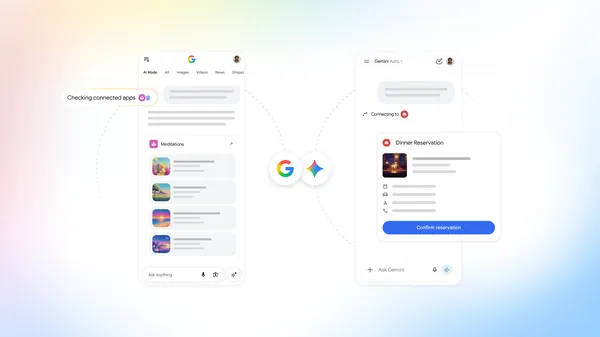
Developers can now apply to join the Connected Apps Platform, which connects Gemini with over 60 popular applications.
GoogleAvailableGoogle added voice-driven editing, rewriting, and formatting to gemini-3.5-transcribe and gemini-3.5-transcribe-live, letting users modify dictated speech or existing text by voice.
OpenAI introduced two-hour and eight-hour background completion windows in the Responses API public beta with discounted token rates.
Linked billing lets third-party platforms bill customers directly for Claude API usage through their own Claude organizations without sharing API keys.
OpenAI expanded its ChatGPT for Academic Researchers program to give 200,000 researchers worldwide free access to its frontier models.
OpenAI released the omni-moderation-csam-latest model to let approved organizations detect and prioritize potential CSAM and AI-generated CSAM images at no cost.
 GoogleAvailable
Google introduced the Gemini Decisions API powered by the Gemini Decision 1 model, enabling developers to evaluate up to 1,000 yes/no, choice, and rubric-scoring questions in a single multimodal pass.
OpenAI Codex 0.167.2 now sends tool updates incrementally by default when using Google Cloud Vertex AI. Users can opt out of this behavior in their configuration file.
Fast mode delivers up to 2.5x higher output tokens per second for Claude Fable 5.2 on the Claude API when requested via the speed parameter, at higher per-token pricing.
Anthropic launched Claude Fable 5.2 and Mythos 5.2 with 1M token context, 128k max output, and always-on adaptive thinking. Fable 5.2 for reasoning agents; Mythos 5.2 for verified orgs. Pricing: $8/MTok in, $40/MTok out.
New CLI command identifies latency bottlenecks in Claude API code and tests faster configurations against your evals.
GoogleAvailableGoogle deprecated gemini-embedding-2-preview; API calls now automatically route to gemini-embedding-2 with same schema and pricing, no re-indexing needed.
Admins can now sign out any member of their Claude Enterprise organization from all sessions via the Admin API in beta. The member remains in the organization and can sign back in.
Organizations can now create IP allowlists in the Claude Console to limit API requests to specific IPv4/IPv6 addresses or CIDR ranges, reducing risk from leaked keys.
 GoogleAvailable
Google launched visual, interactive explorations in the Gemini app for studying complex science and history topics layer-by-layer.
 GooglePreview
Google's Connected Apps Platform lets developers build and manage apps for Search and the Gemini app using a cloud-hosted MCP server or Android MCP.
GoogleBetaGoogle released gemini-api, a stateless, zero-dependency command-line client for the Gemini API. It lets scripts, CI pipelines, and coding agents call Gemini without SDK setup.
GoogleAvailableNew paid-tier Google Gemini API projects now store Generate Content API requests by default. Developers who do not want requests logged must opt out per request or in the dashboard.
OpenAI released GPT-6.1 Terra, a fast, efficient model built for visual reasoning, computer use, and natural writing. It is available through the OpenAI API.
Anthropic's Compliance API now includes a Security posture endpoint in beta for Claude Enterprise orgs, letting admins fetch current security posture results.
ChatGPT Pro and Business subscribers can now claim up to $500 per month in OpenAI API credits. This allows paid subscribers to build and test API applications using their existing plan.
Anthropic raised the maximum request size for the Messages API and Token Counting API from 32 MB to 128 MB on the first-party Claude API, allowing larger payloads in a single call.
 GoogleAvailable
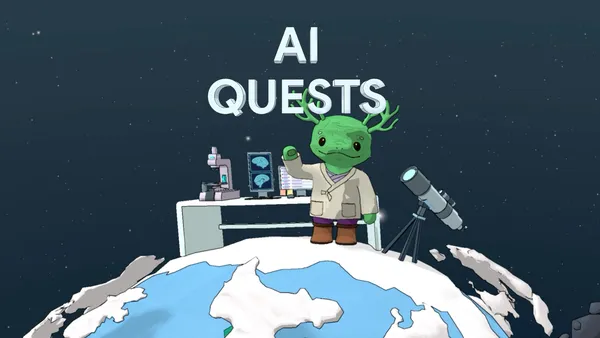
Google released teacher training modules in the Google AI Educator Series to support its AI Quests program. The modules help educators integrate AI literacy lessons into existing curricula and guide classroom discussion.
GoogleAvailableGoogle Research and the Stanford Accelerator for Learning launched Polar Peaks, an interactive AI quest for ages 11 to 14. Students learn AI literacy and human oversight by mapping brain neurons.