 Google
 Maps Ask Maps Itineraries and Route Tips
In brief
Google Maps is launching new Ask Maps features to help users build custom road trip itineraries, receive route tips, find local appointments, and search saved lists with live availability 1. These updates provide real-time route details, check business hours, and manage holiday travel plans on Android and iOS devices 1.

Who can use it
You can access these new features today on Android and iOS devices in the United States and across global markets where Ask Maps is offered 1.
Does this affect you?
- DevelopersNo developer APIs, SDKs, or integration tools are announced for these consumer-facing mobile mapping features.
- Product managersProduct managers can observe how conversational agentic capabilities and itinerary management are integrated into consumer mapping apps.
- FoundersThis is a feature rollout for an existing consumer application rather than a foundational platform for new startups.
- Everyday usersEveryday users can plan holiday road trips, search saved lists for immediate availability, and find local service appointments easily.
How to start
The lab has not published a formal step-by-step technical setup guide since these features roll out directly inside the Google Maps mobile application 1.
Open Google Maps on Mobile
Launch the Google Maps application on your Android or iOS device to begin using the new Ask Maps capabilities.
Use Ask Maps for Itineraries
Ask Maps to build trip itineraries or search your saved lists for places with immediate availability.
What you can build
Before you rely on it
Quick check
3 questionsAvailability
Sources
1 merged into this cardMore from Google
 GoogleAvailable
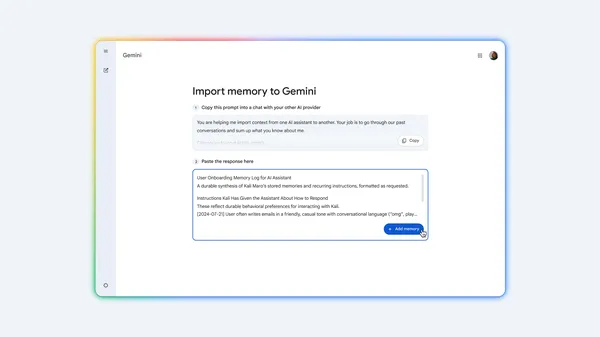
Gemini chat history and memory import
Google added tools to import chat history, context, and preferences from other AI assistants into Gemini. Users can bring over past conversations and tailored instructions without starting from scratch.
 GooglePreview
Tool Retrieval in the Gemini API
Gemini's Interactions API now supports on-demand loading of tool parameter schemas. Agents with large tool libraries can keep schemas out of context until needed, cutting input tokens, latency, and selection errors.