

Tool Retrieval in the Gemini API
Gemini's Interactions API now supports on-demand loading of tool parameter schemas. Agents with large tool libraries can keep schemas out of context until needed, cutting input tokens, latency, and selection errors.
Loading launches from 4 labs
Topic
Libraries, command-line tools and their releases

Gemini's Interactions API now supports on-demand loading of tool parameter schemas. Agents with large tool libraries can keep schemas out of context until needed, cutting input tokens, latency, and selection errors.

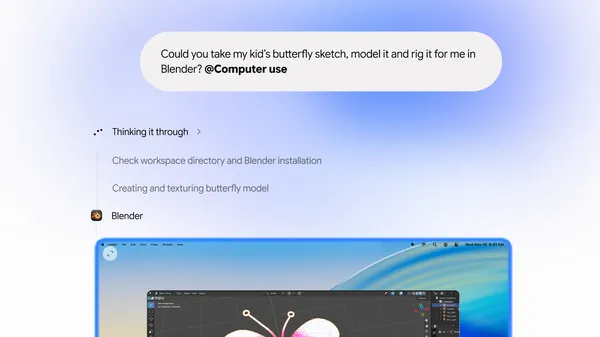
Google added computer use to the Gemini app for Mac, letting Gemini automate multi-step tasks across local files, desktop apps, and the web in an isolated background window.
Google's gemini-cli v0.69.0 adds support for a standalone theme.json configuration file. Users can now define custom themes in a dedicated file.
Google added a /stats heatmap subcommand to Gemini CLI v0.69.0 to track daily token usage. It lets developers monitor their token consumption directly from the command line.
Codex version 0.170.0 adds experimental support for using identically named Model Context Protocol servers across different environments.
Codex v0.170.0 adds WebRTC negotiation, allowing users to conduct realtime voice calls directly in the terminal user interface.

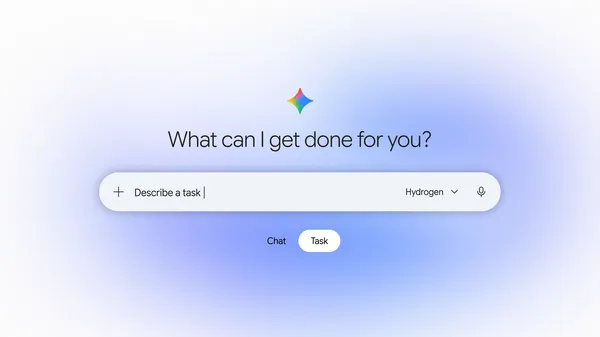
Gemini can now handle complex tasks like scheduling appointments, analyzing bills, and shopping by connecting to your Google apps and payment methods.

An efficient and versatile model for everyday work and multistep agentic workflows, available now in ChatGPT Work, Codex, and the API.

New agentic capabilities allow Ask Maps to find open slots and call local businesses for appointments like beauty, pet care, and home repair.
OpenAI introduced computer-use agents designed to work across healthcare software to handle real operational and clinical tasks.
ChatGPT Wallet is a secure payment method that lets agents in ChatGPT Work, Codex, and dots complete purchases with your approval.
Codex 0.169.0 introduces an opt-in Cloud connection to the terminal on macOS and Linux. Users can send images, select models and reasoning effort, and archive or restore Cloud conversations directly from the terminal.
Claude Code adds an experimental opt-in Code Mode where Claude writes JavaScript to call its tools.

A feature in Google Antigravity that automatically alternates between models like Carbon and Hydrogen within a single session to save tokens and time.
AlphaProof Code agents generated 3 million lines of Lean proofs to formally verify Signal's core encryption protocols.
Gemini CLI v0.68.0 introduces a new extension validation command with evaluation tests to help developers verify their extensions work correctly.
Claude Code's remote-control command now accepts a --settings file flag that applies configuration to every session it starts. Changes to the file require a restart to take effect.
New CLI command identifies latency bottlenecks in Claude API code and tests faster configurations against your evals.
A new `permissions.denyInsteadOfPrompting` setting automatically denies tool calls that would otherwise pause for permission prompts, letting the turn continue without interruption.
Gemini CLI v0.67.0 adds support for bridging the IDE companion into container sandboxes over exec stdio, connecting sandboxed CLI sessions with the IDE companion.
Claude Code cloud sessions on Anthropic-hosted environments now include a No repository option. Users can start a hosted cloud session without selecting a repository first.
Google introduced Antigravity and Cheminformatics Skills for agentic cheminformatics. They are designed to speed up drug discovery workflows, search compounds, and propose novel rigidified macrocycles.
Claude Code cloud sessions now display form cards when an MCP server requests input, allowing users to submit answers or decline rather than having requests canceled unseen.
Developers can now sign in to a Claude apps gateway directly from the VS Code chat panel without using a terminal.
Google has moved its Computer Use tool to general availability across both the Interactions and GenerateContent APIs.
OpenAI introduced automatic review for Agents API sessions. Developers can allow a model to evaluate conversation intent and risk to automatically approve or deny tool and permission requests.

Meta's personal AI agent, Muse, is now available in Singapore on iOS, Android, and muse.ai, featuring local app connectors like Shopee and Grab.
Google released gemini-api, a stateless, zero-dependency command-line client for the Gemini API. It lets scripts, CI pipelines, and coding agents call Gemini without SDK setup.

Meta has launched its personal AI agent, Muse, in Australia with local app connectors, real-time voice capabilities, and custom spaces.
Gemini can now place phone calls to US businesses on your behalf to check inventory, compare quotes, or handle scheduling.
US users can now text Gemini via Google Messages or iMessage to manage tasks, send photos, and steer multi-step runs on the go.
Claude Code now accepts MCP server JSON from standard input using `claude mcp add-json <name> -`. This keeps sensitive tokens off the command line.
OpenAI's Codex terminal workspace now lets users search through older agent tasks by name, prompt preview, or working directory.
Codex 0.169.0 lets users add or edit custom model providers from the terminal, create providers during sign-in, and use device codes for gateways.
Codex 0.168.0 lets you attach audio recordings when using audio-capable models. It skips confirmed rejected clips on later turns and uses clip duration to keep more short recordings in context.
Codex 0.169.0 adds support for multiple side-chat tabs in the terminal workspace. Users can navigate between them and restore saved chats after a restart.
OpenAI Codex 0.168.0 adds an opt-in feature flag to generate and edit animated GIFs with frame count and timing controls, expanding its image generation beyond static images.

Gemini can now control, change, or fix device settings and storage by voice. Rolling out on Pixel 10 series and Motorola Signature 27.

Google rolls out Gemini Intelligence to motorola signature 27 (U.S. pre-order Nov 19) and Pixel 10 series via Pixel Drop, adding Rambler voice-to-text and task automation in UK, India, Japan.

Google is previewing /swarm in Google Antigravity, which turns one prompt into a coordinated team of AI agents for complex tasks like architectural design, coding, and auditing, with real-time tracking.

Google and Artificial Analysis released MKA, a benchmark evaluating how AI agents perform multi-step, visually complex tasks across 10 professional verticals.

Google Cloud launched Gemini for healthcare, an AI platform that connects clinical, operational, and administrative systems to handle tasks like medical records synthesis and prior authorization review.

OpenAI lets eligible businesses claim their profile, manage info, see engagement insights, and build a Business Agent to answer customer questions in ChatGPT.
Anthropic added fast mode support for Claude on Vertex AI across global, US, and EU regions, with automatic fallback to standard speed if fast mode is refused.
Self-hosted Claude Managed Agents allow you to run agents in your own cloud or on-premise environment. You host the agents, credentials, and session history while controlling where requests are sent.
Claude Code now backgrounds MCP tool calls immediately and reports results when they finish, with an option to disable this behavior.
OpenAI released BioBasicsBench, a 100-task benchmark to evaluate how well AI agents interpret raw experimental data and perform everyday wet-lab science tasks.
Claude Code now lets you name a session's billing group using the attributionProject setting. This helps organizations using Claude apps gateways track usage by project.

OpenAI updated its Agents API with the ability to modify tools in active sessions, background context compaction by default, and opt-in time awareness.