 Meta
OpenAIAvailable
API
OpenAI adds standby mode for GPT-Live WebRTC sessions
OpenAI now supports standby configuration for GPT-Live WebRTC sessions, pausing model inference during inactivity and resuming when someone speaks.
Loading launches from 4 labs
Topic
New API endpoints, parameters or limits for developers
OpenAI now supports standby configuration for GPT-Live WebRTC sessions, pausing model inference during inactivity and resuming when someone speaks.
OpenAI released GPT-Live-1.1 on its API, updating its live voice model with better pronunciation, accent consistency, and transcription across multilingual conversations.
 GoogleAvailable
Google's new Gemini 4 model pairs a 1M-token context window and four thinking levels with lower cost per task. It scores 61 on the AA Intelligence Index and targets complex coding, analysis, and cyber workflows.
OpenAI released GPT-6.2 Astra for complex reasoning and GPT-6.2 Sol for everyday coding, both supporting the Responses and Chat Completions APIs.

An efficient and versatile model for everyday work and multistep agentic workflows, available now in ChatGPT Work, Codex, and the API.
OpenAI released the omni-moderation-csam-latest model to let approved organizations detect and prioritize potential CSAM and AI-generated CSAM images at no cost.
Codex 0.169.0 introduces an opt-in Cloud connection to the terminal on macOS and Linux. Users can send images, select models and reasoning effort, and archive or restore Cloud conversations directly from the terminal.
 GoogleAvailable
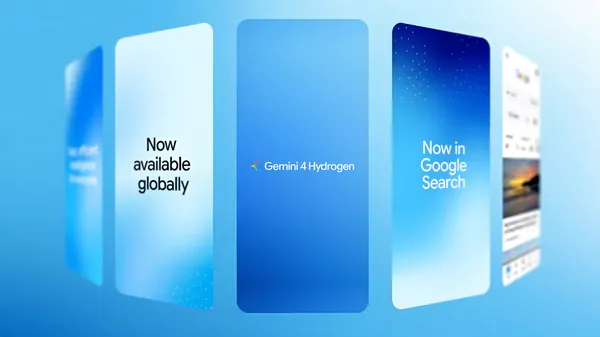
Google has integrated its Gemini 4 Hydrogen model into Google Search globally, improving intent understanding, query fan-out for better web linking, visual responses, and multilingual support.
Anthropic's new default model for Pro, Max, Ultra, and Team plans, built for daily knowledge work like research, analysis, and finished files. It matches Opus 5's high-effort performance at its default Medium effort.
 GoogleAvailable
Google introduced the Gemini Decisions API powered by the Gemini Decision 1 model, enabling developers to evaluate up to 1,000 yes/no, choice, and rubric-scoring questions in a single multimodal pass.
OpenAI Codex 0.167.2 now sends tool updates incrementally by default when using Google Cloud Vertex AI. Users can opt out of this behavior in their configuration file.
 GoogleAvailable
Google rolls out Gemini Intelligence to motorola signature 27 (U.S. pre-order Nov 19) and Pixel 10 series via Pixel Drop, adding Rambler voice-to-text and task automation in UK, India, Japan.
 GoogleAvailable
Google and Artificial Analysis released MKA, a benchmark evaluating how AI agents perform multi-step, visually complex tasks across 10 professional verticals.
Fast mode delivers up to 2.5x higher output tokens per second for Claude Fable 5.2 on the Claude API when requested via the speed parameter, at higher per-token pricing.
Anthropic launched Claude Fable 5.2 and Mythos 5.2 with 1M token context, 128k max output, and always-on adaptive thinking. Fable 5.2 for reasoning agents; Mythos 5.2 for verified orgs. Pricing: $8/MTok in, $40/MTok out.
New CLI command identifies latency bottlenecks in Claude API code and tests faster configurations against your evals.
GoogleAvailableGoogle deprecated gemini-embedding-2-preview; API calls now automatically route to gemini-embedding-2 with same schema and pricing, no re-indexing needed.
GoogleAvailableGemini API function responses now support Office/OpenDocument files, audio, video, and file URIs, letting tools return richer data to the model.

OpenAI's GPT-6 Cyber model investigates vulnerabilities, reproduces them in authorized test environments, and verifies fixes. It is trained to stay within authorized scope.

OpenAI launched two new image models, GPT-Image-2.6 Sunburst and Flare, supporting adjustable complexity, SVG and animated GIF output, plus markup-guided editing.
Anthropic added the GET /v1/organizations/analytics/cost endpoint to the Claude apps gateway admin API, enabling organization admins to track spend by developer, day, or IdP group.
OpenAI now supports outbound SIP calling across all organizations in the Live API, enabling GPT-Live to place calls directly to phone numbers via SIP providers.
 GoogleAvailable
Google launched visual, interactive explorations in the Gemini app for studying complex science and history topics layer-by-layer.
ChatGPT Pro and Business subscribers can now claim up to $500 per month in OpenAI API credits. This allows paid subscribers to build and test API applications using their existing plan.
OpenAI's GPT-6.2 Astra is a frontier model built for professional work and scientific research, available in ChatGPT Work, Codex, and the API.
GoogleAvailableGoogle added voice-driven editing, rewriting, and formatting to gemini-3.5-transcribe and gemini-3.5-transcribe-live, letting users modify dictated speech or existing text by voice.
 GoogleAvailable
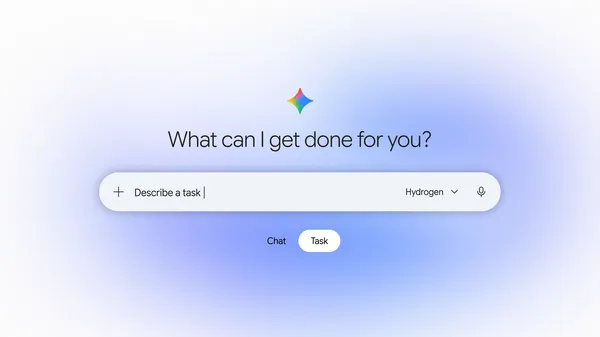
Google's new Gemini 4 Hydrogen model features a 1M-token unified context window, four thinking levels, and long decode for agentic workflows.
 GoogleAvailable
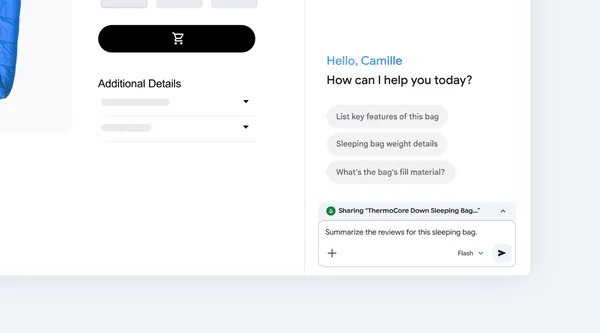
Google added Gemini to the Chrome side panel so users can get quick answers on any website. It summarizes articles, compares products, and explains complex topics directly in the browser.
GoogleAvailableThe Gemini API now accepts PowerPoint (PPT), OpenDocument Presentation (ODP), and OpenDocument Spreadsheet (ODS) files as input, plus page-image processing for Word (DOC) files.
Anthropic raised the maximum request size for the Messages API and Token Counting API from 32 MB to 128 MB on the first-party Claude API, allowing larger payloads in a single call.