OpenAIAvailable
Dev tool · 00:44
OpenAI Codex TUI workspace enabled by default
OpenAI's Codex CLI now enables its TUI workspace by default, showing document previews, image previews, and subagent transcripts beside the main conversation.
Loading launches from 4 labs
Topic
Systems that plan and take multi-step actions with tools
OpenAI's Codex CLI now enables its TUI workspace by default, showing document previews, image previews, and subagent transcripts beside the main conversation.
OpenAI released GPT-Live-1.1 via API, a full-duplex voice model with better accent consistency, transcription accuracy, and task delegation for building voice agents. Includes standby mode to pause inference during silence at lower cost.
 GoogleAvailable
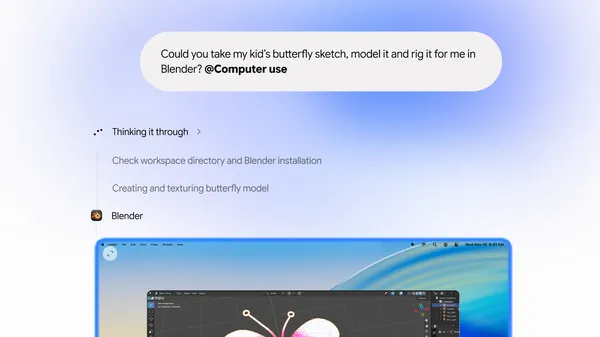
Google added computer use to the Gemini app for Mac, letting Gemini automate multi-step tasks across local files, desktop apps, and the web in an isolated background window.
 GoogleAvailable
Google's new Gemini 4 model pairs a 1M-token context window and four thinking levels with lower cost per task. It scores 61 on the AA Intelligence Index and targets complex coding, analysis, and cyber workflows.
 GoogleAvailable
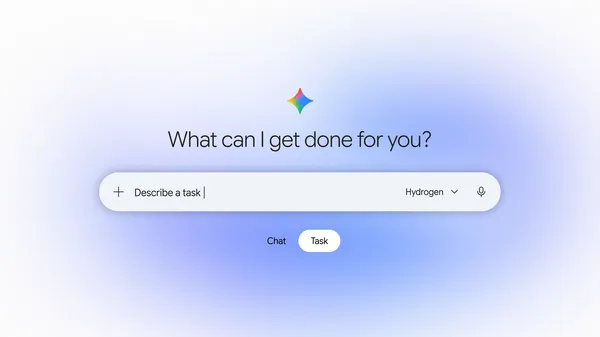
Gemini can now handle complex tasks like scheduling appointments, analyzing bills, and shopping by connecting to your Google apps and payment methods.

An efficient and versatile model for everyday work and multistep agentic workflows, available now in ChatGPT Work, Codex, and the API.
 GoogleAvailable
New agentic capabilities allow Ask Maps to find open slots and call local businesses for appointments like beauty, pet care, and home repair.
Codex 0.169.0 introduces an opt-in Cloud connection to the terminal on macOS and Linux. Users can send images, select models and reasoning effort, and archive or restore Cloud conversations directly from the terminal.
 GoogleAvailable
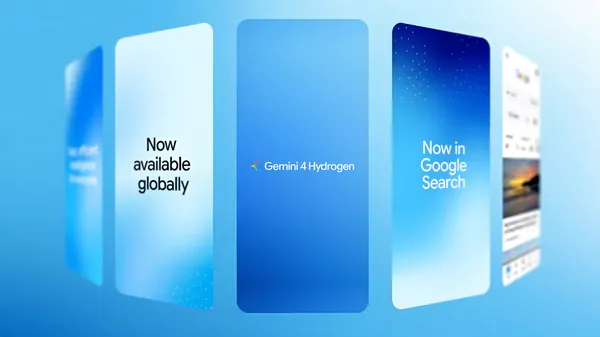
Google has integrated its Gemini 4 Hydrogen model into Google Search globally, improving intent understanding, query fan-out for better web linking, visual responses, and multilingual support.
Anthropic's new default model for Pro, Max, Ultra, and Team plans, built for daily knowledge work like research, analysis, and finished files. It matches Opus 5's high-effort performance at its default Medium effort.
 GoogleAvailable
Google introduced the Gemini Decisions API powered by the Gemini Decision 1 model, enabling developers to evaluate up to 1,000 yes/no, choice, and rubric-scoring questions in a single multimodal pass.
 GoogleAvailable
Gemini can now control, change, or fix device settings and storage by voice. Rolling out on Pixel 10 series and Motorola Signature 27.
GoogleAvailableGoogle rolls out Gemini Intelligence to motorola signature 27 (U.S. pre-order Nov 19) and Pixel 10 series via Pixel Drop, adding Rambler voice-to-text and task automation in UK, India, Japan.
A new `permissions.denyInsteadOfPrompting` setting automatically denies tool calls that would otherwise pause for permission prompts, letting the turn continue without interruption.
GoogleAvailableGemini API function responses now support Office/OpenDocument files, audio, video, and file URIs, letting tools return richer data to the model.
GoogleAvailableThe Gemini API now accepts PowerPoint (PPT), OpenDocument Presentation (ODP), and OpenDocument Spreadsheet (ODS) files as input, plus page-image processing for Word (DOC) files.
 GoogleAvailable
Google released EmbeddingGemma 2, a 740M-parameter open embedding model on the Gemma 4 architecture. It maps code, images, video, and audio into one unified space on edge devices for private, offline multimodal search.
Claude Code cloud sessions now display form cards when an MCP server requests input, allowing users to submit answers or decline rather than having requests canceled unseen.
GoogleAvailableGoogle has moved its Computer Use tool to general availability across both the Interactions and GenerateContent APIs.
 GoogleAvailable
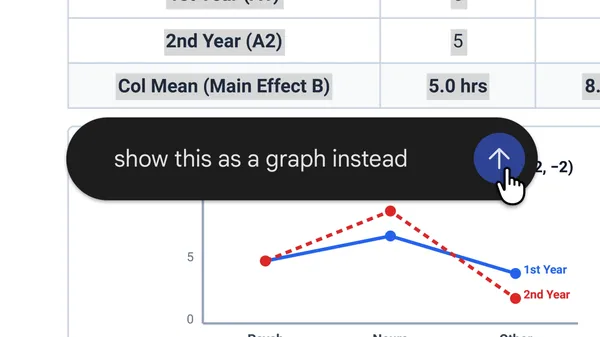
Gemini users can now preview, manually edit, and instruct AI to refine documents, spreadsheets, PDFs, and code directly inside the chat interface.
 GoogleAvailable
Google launched visual, interactive explorations in the Gemini app for studying complex science and history topics layer-by-layer.
 GoogleAvailable
XREAL AURA is a pair of tethered XR glasses running Android XR. It projects apps onto a transparent 70-degree field of view and uses Gemini to analyze your screens and physical surroundings.

 MetaAvailable
Meta has launched its personal AI agent, Muse, in Australia with local app connectors, real-time voice capabilities, and custom spaces.
GoogleAvailableGemini can now place phone calls to US businesses on your behalf to check inventory, compare quotes, or handle scheduling.
GoogleAvailableUS users can now text Gemini via Google Messages or iMessage to manage tasks, send photos, and steer multi-step runs on the go.
GoogleAvailableGoogle's new Gemini 4 Hydrogen model features a 1M-token unified context window, four thinking levels, and long decode for agentic workflows.
 GoogleAvailable
A feature in Google Antigravity that automatically alternates between models like Carbon and Hydrogen within a single session to save tokens and time.
 GoogleAvailable
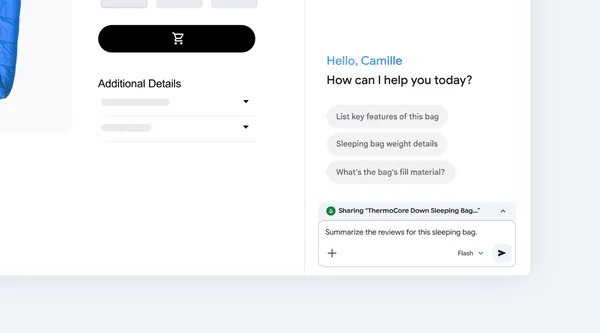
Google added Gemini to the Chrome side panel so users can get quick answers on any website. It summarizes articles, compares products, and explains complex topics directly in the browser.
 GoogleAvailable
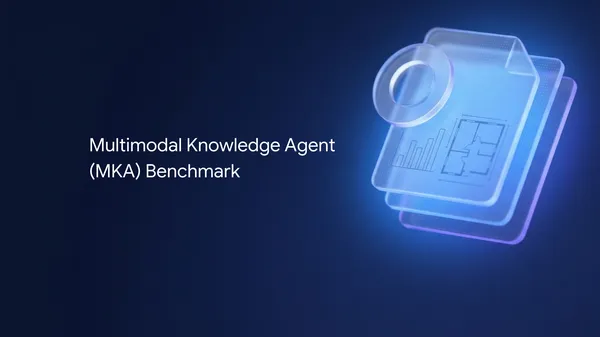
Google and Artificial Analysis released MKA, a benchmark evaluating how AI agents perform multi-step, visually complex tasks across 10 professional verticals.
 MetaAvailable
Meta's personal AI agent, Muse, is now available in Singapore on iOS, Android, and muse.ai, featuring local app connectors like Shopee and Grab.